Our Working Hypothesis
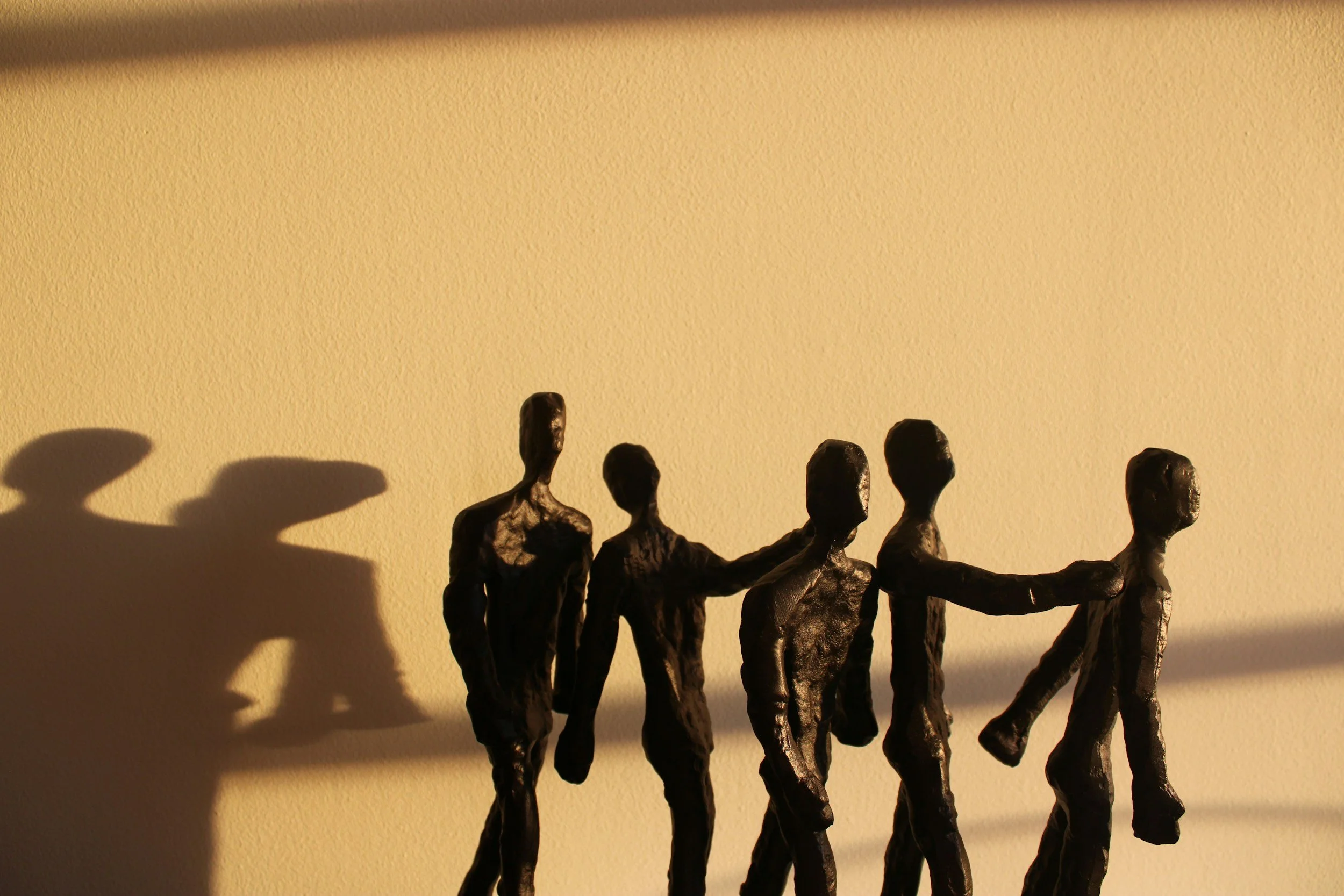
In complex human systems, meaningful change does not emerge from "solving" the world, but from a cognitive and ontological restructuring of the observer.
We hypothesize that the effectiveness of any intervention is directly proportional to the observer's capacity to inhabit the rupture and admit the inherent mystery of the system. True agency is found not in the arrogance of the fixer, but in the precision of the participant.
Complexity changes the rules
Most organizations act as if the world were a complicated machine to be optimized. It isn’t. Complexity is an irreducible condition of reality. In such environments.
What helps is not more information, but the capacity to hold tension, to witness the unpredictable, and to operate with integrity when the models fail. We don't just bridge the gap between "intent" and "impact"—we bridge the gap between the Observer and the Field.

What we have learned, across contexts
From systems engineering, we learned that failure is rarely individual. It emerges from interactions between people, tools, processes and context.
From peacebuilding, we learned that relationships precede agreement. And that many conflicts are structural long before they become personal.
From governance work, we learned that unclear decision-making creates silent violence: frustration, disengagement, burnout.
From facilitation and organisational learning, we learned that change accelerates when people are invited to think together — not when they are told what to do.
From the Mystery of Life, we learned that the most potent action comes from a place of radical admission: that life is not a problem to be solved, but a mystery to be enjoyed and navigated with reverence.
Different fields. Same pattern.

These are the three epistemological pillars of a truly integral education.
The disciplines we work with
To test this hypothesis, we move beyond the acquisition of "new tools" into a fundamental redesign of human intelligence through three integrated dimensions:
1. The Mechanics (Science & Dynamics) The rigor of networks and non-linear dynamics. We map the underlying patterns of flow, feedback, and emergence to identify the structural thresholds where a system is ready to shift.
2. The Psyche (The Interiority of the Observer) The study of the unconscious forces and deep-seated patterns that drive human behavior. We recognize that the internal state and unmapped "shadow" of the observer are the primary variables in any systemic intervention.
3. The Ontological (Philosophy & Direct Experience) The transition from intellectual description to a visceral engagement with reality. Through philosophical inquiry and expanded states of perception, we develop the capacity to face "the rupture" and experience the interconnected field directly.